Veteran Escort Program Finder
Looking to help veterans or need escort services? This tool helps you find local programs that connect veterans with companionship, transportation, and support.
Results for
VA Medical Center
Many VA hospitals have volunteer escort programs. Contact their volunteer office for transportation or companion services.
Find your local VAHiring Our Heroes
Connecting veterans with employment opportunities across your state. Attend a career summit near you.
Find career summitsLocal Fire/Police Departments
Many departments have veteran escort programs for ceremonial events or transportation assistance.
American Legion / VFW
Local posts often organize escort programs for ceremonies and community support.
Find your Legion postWhen you hear the word "escort," most people think of paid companionship or nightlife. But there’s another kind of escort-one that doesn’t charge a fee, doesn’t wear heels, and doesn’t work for a private agency. These are the veteran escort programs, where active-duty service members, first responders, and volunteers walk beside aging veterans to honor their service, help them get to medical appointments, or guide them into civilian life after decades of duty.
It started quietly. In 2012, a job fair held on the USS Intrepid in New York City became the first major event where veterans were not just invited-but personally guided through the crowd by volunteers who knew exactly what they’d been through. That day, Ferdinand Sabala, a New Jersey National Guard veteran fresh off a year in Afghanistan, met a recruiter from Booz Allen Hamilton. Within a week, he had a job. "My hope became my reality," he said. That moment didn’t happen by accident. It happened because someone walked with him.
What Is a Veteran Escort?
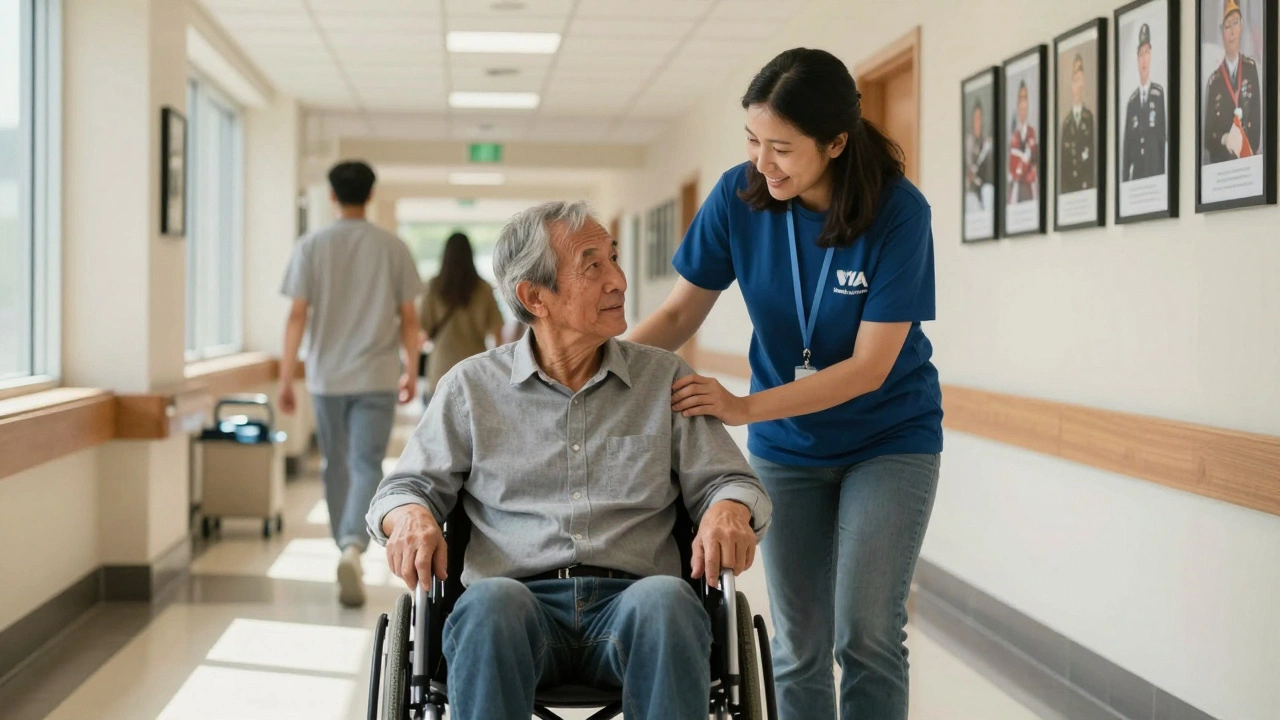
A veteran escort isn’t a job title you find on LinkedIn. It’s a role. It’s the firefighter who lines up outside the Missouri Veterans Hall of Fame to walk 101-year-old Velma Jesse to the podium. It’s the VA staff member who wheels a veteran with mobility issues from radiology to physical therapy, listening to stories of Iwo Jima or Fallujah while doing it. It’s the Air Force sergeant who drives 90 minutes on a Saturday to take a WWII vet to the local fair, because the man hasn’t left his house in months.
These escorts don’t have uniforms for the job-they wear whatever they’re already wearing. Their training? A quick chat about patience, respect, and how to ask, "Would you like to talk about it?"-not "Tell me your war stories."
The difference between a veteran escort and a general volunteer? It’s personal. These aren’t people handing out sandwiches at a shelter. They’re holding a veteran’s arm as they climb the steps to receive a medal. They’re sitting quietly while someone recounts losing a brother in Vietnam, then driving them home without saying a word.
The Quiet Heroes Behind the Scenes
At the Birmingham VA Medical Center, Ryan Davis was a patient escort-someone whose job was to move veterans between appointments. One day, he found an elderly veteran unresponsive in a hallway. He dropped everything, started CPR, and kept going until paramedics arrived. The man lived. Later, Davis said he didn’t think about it. He just acted. "I felt like my wife was guiding me," he said. She’d died from COVID-19 a year earlier. In that moment, he wasn’t just a worker. He was a lifeline.
That’s the pattern. These roles don’t come with titles like "hero" or "savior." But time and again, the people who do this work say the same thing: they get more than they give.
One VA employee wrote on Indeed.com: "It’s very enjoyable working under patient care with the Veterans. They have very interesting war stories to tell." Not because they’re looking for drama. But because for many of these men and women, no one’s asked them to talk in years.
From Job Fairs to Lifelines
The biggest name in veteran escorting isn’t a government agency-it’s Hiring Our Heroes, a nonprofit under the U.S. Chamber of Commerce Foundation. Since 2012, they’ve held over 300 career summits across the country, connecting veterans with employers who actually want to hire them.
Take Jay Junkins. He was stationed at Ramstein Air Base in Germany, 4,000 miles from home. He wanted to move to Oshkosh, Wisconsin, to be near family. He didn’t know how to start. Then, at a Hiring Our Heroes event, the emcee said, "We have a company here looking for someone in Oshkosh." Jay walked over. Got the job. Moved within six weeks.
That’s the magic. Most job boards don’t care where you want to live. Hiring Our Heroes does. They match veterans with employers who have openings in specific cities. They don’t just hand out resumes-they hand out second chances.
Since 2012, they’ve helped over 100,000 veterans find work. And it’s not just big companies. Small businesses, local government jobs, even family-owned shops-each one had someone there, not just to interview, but to say, "We see you. We want you here."
The Emotional Weight of Walking Together
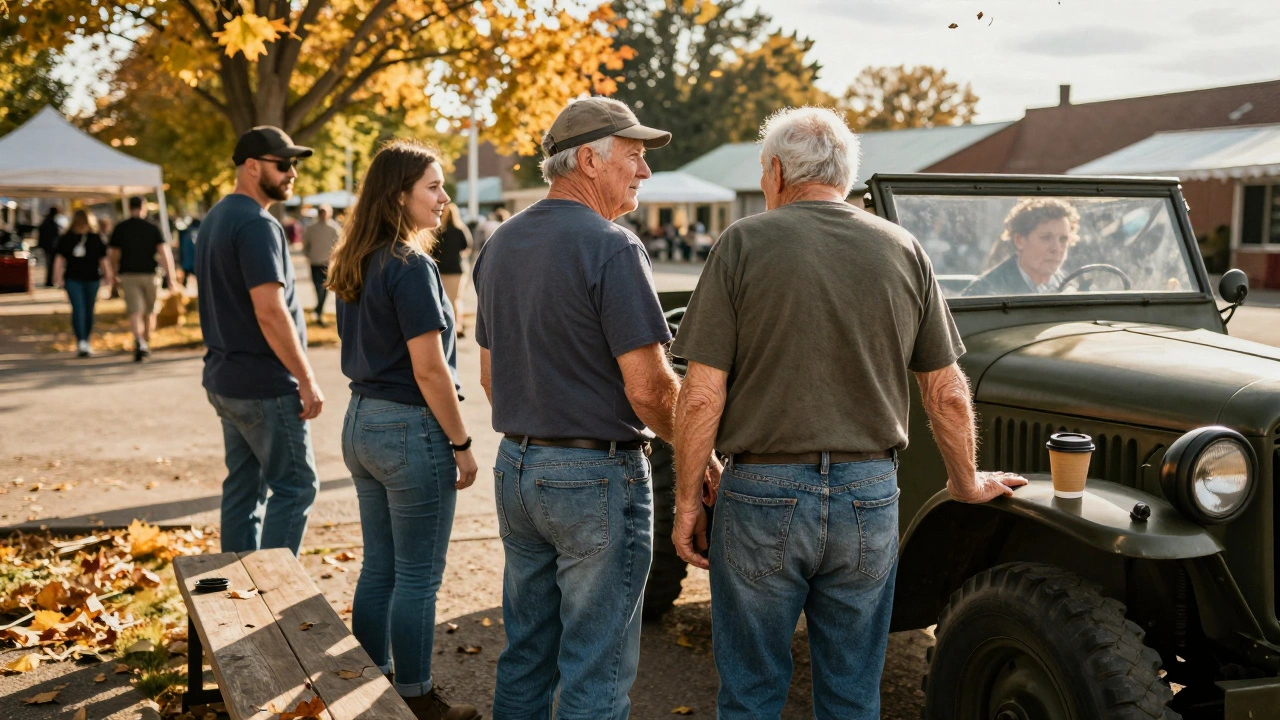
One volunteer in Ohio has spent over 10,000 hours escorting veterans. He doesn’t keep track of how many he’s helped. He doesn’t post photos online. He just shows up. Every week. Rain or shine. Sometimes he takes them to the VA. Sometimes he just drives them to the grocery store. "They don’t need a savior," he said. "They just need someone who won’t look away."
That’s the thread running through every story. It’s not about fixing their lives. It’s about walking beside them while they figure it out.
For elderly veterans, isolation is deadly. A 2022 VA report found that 11-18% of post-9/11 veterans experience homelessness within five years of leaving service. But even before that, many just disappear-into silence, into loneliness. An escort doesn’t solve housing. But they might be the first person to knock on their door in months.
How These Programs Work-No Fancy Tech, Just Human Effort
You won’t find an app for veteran escorting. No AI matching system. No chatbot scheduling rides. These programs run on paper lists, phone calls, and volunteers showing up with a car, a smile, and a willingness to listen.
At VA hospitals, patient escorts are often hired as part of the support staff. They don’t need medical licenses. They need empathy. Training lasts a day: how to use the wheelchair lift, how to ask if someone wants water, how to stay quiet when a story gets heavy.
Ceremonial escorts-like the ones who walk with veterans to memorials or induction ceremonies-are usually active-duty service members. They wear their uniforms. They carry flags. They stand at attention. But the real work happens when they’re not in uniform. When they sit in the back of a van, listening to a man talk about his buddy who didn’t come home.
And then there are the grassroots efforts. A fire department in Texas started taking veterans to the county fair every year. A church in Iowa began driving veterans to church on Sundays. A retired Marine in Florida started a weekly coffee meet-up for vets who didn’t want to talk about the war-just wanted to watch baseball.
These aren’t funded by grants. They’re funded by heart.
Why This Matters More Than Ever
There are 18 million veterans in the U.S. About 1.5 million are over 75. Most of them live alone. Many have no family nearby. Their children are grown. Their friends are gone. The world moved on. But they’re still here.
These escort programs aren’t luxury services. They’re lifelines. They’re the reason a 92-year-old WWII veteran got to see the new National Museum of the United States Army before he passed. They’re the reason a young vet from Iraq didn’t end up sleeping in his car after leaving the military. They’re the reason someone still remembers the name of the guy who served in Korea.
And the people who do this? They don’t get medals. They don’t get headlines. But they get something deeper: the quiet knowledge that they made a difference in a life that had already given everything.
How to Get Involved
You don’t need to be a veteran to help. You don’t need a car, a uniform, or a degree. You just need to show up.
- Check with your local VA hospital-they often need volunteers to escort patients to appointments.
- Reach out to Hiring Our Heroes. They host career summits in nearly every state.
- Contact your city’s fire or police department. Many have veteran escort programs for ceremonies.
- Join a local veterans’ group. Even a weekly coffee run can change someone’s week.
- If you’re a business owner, offer to hire a veteran. You don’t need to run a big company. Just one job matters.
It’s not about grand gestures. It’s about showing up. Again. And again. And again.
Are veteran escort programs paid jobs?
Most veteran escort roles are volunteer-based. Some VA facilities hire patient escorts as paid staff, typically paying between $15-$20 per hour. But the majority of ceremonial and community-based escorting is done by volunteers-active-duty service members, retirees, first responders, and civilians who simply want to help. There’s no fee charged to veterans.
How do I find a veteran escort program near me?
Start with your local VA medical center-they often have volunteer coordinators. You can also visit the Hiring Our Heroes website to find upcoming career summits in your area. Fire departments, American Legion posts, and Veterans of Foreign Wars (VFW) chapters frequently run local escort programs. A quick Google search for "veteran escort program [your city]" usually brings up local contacts.
Do I need military experience to become a veteran escort?
No. While many escorts are veterans or active-duty personnel, civilians are just as welcome. What matters is respect, patience, and a willingness to listen. Training is usually minimal-a few hours on safety, communication, and basic etiquette. Many programs pair new volunteers with experienced ones for their first few outings.
What’s the difference between a veteran escort and a VA social worker?
Social workers handle medical referrals, benefits applications, and mental health support. Patient escorts handle transportation, companionship, and emotional presence. One helps with paperwork. The other helps with presence. Both are vital. Many veterans say the escort-who sits with them quietly while they wait for a scan-means more than the social worker who called them last week.
Why are these programs growing now?
Because the oldest veterans are passing away, and the younger ones are struggling to transition. The VA estimates 1.5 million post-9/11 veterans are still living with invisible wounds-PTSD, isolation, unemployment. Traditional support systems can’t reach everyone. But a person showing up with coffee and a ride? That can. These programs fill the gaps that bureaucracy can’t.
There’s no grand ceremony for the people who do this work. No parade. No plaque. But if you ever see a veteran walking slowly down a hospital hallway, holding the arm of someone in a plain T-shirt and jeans-you’ll know. That’s the real kind of escort. And they’re the reason this country still remembers what honor looks like.